


What Are the Best Strength Training Programs for Frail Elderly Residents in Assisted Living?
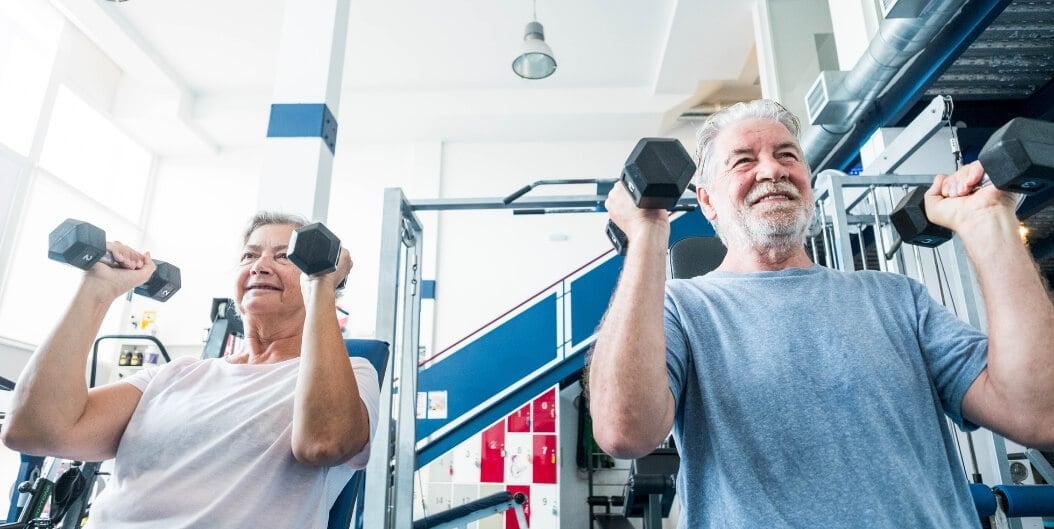
Progressive resistance band training, sit-to-stand functional programs, light dumbbell circuit training, guided balance and core stability programs, and chair-based group strength classes are the most effective programs for frail elderly residents in assisted living. They are designed with progression in mind, making them both safe to begin with and meaningful to continue.
Muscle loss increases with age. As a result, weakened muscles in frail seniors in an assisted living community can make daily tasks exhausting or even dangerous. Thankfully, strength is not something that is lost forever. Even residents with a very low baseline can regain functional strength, improve stability, and feel more confident in their own bodies with the right program.
Here are five programs designed to help frail elderly residents in assisted living homes accomplish just that.
5 Best Strength Training Programs You Can Do in Assisted Living
1. Progressive Resistance Band Programme
The program employs resistance bands to increase strength over a multi-week training cycle. Resistance bands provide a gentle, joint-friendly tension that can be precisely adjusted to each individual’s current ability, making them ideal for frail seniors.
The sessions are typically 20-30 minutes long and take place two to three times per week. The workout consists of six to eight exercises that target both the upper and lower body, including seated bicep curls, chest presses, lateral arm raises, seated leg extensions, and hip abductions. Each exercise is repeated eight to twelve times, with a short rest period in between sets.
As strength increases, the program moves through the band colours. Most brands use a colour-coded system, with yellow representing the lightest resistance and green or blue representing moderate tension. The resident can start with yellow for the first three to four weeks, then move on to the next level once the current band is no longer a challenge.
That gradual buildup is what creates true, long-term strength without going overboard. This type of structured program is frequently incorporated into the weekly wellness schedule for communities that prioritise meaningful daily activities.
2. Sit-to-stand functional program
This program is based on one of the most fundamental movements of our daily lives; standing up from a seated position. The loss of ability to stand independently is one of the threats to frail residents’ quality of life, which is why training in this specific movement is so beneficial.
A sit-to-stand program begins with supported repetitions on a sturdy chair with armrests to assist you. During the first few weeks, the goal is to complete five to eight reps with support, with a focus on the lowering phase and leg drive. As strength increases, the program gradually reduces the use of the arms, encouraging residents to stand up primarily with their leg muscles.
In six to eight weeks, many participants progress from fully assisted to semi-independent or fully independent repetitions. Sessions last 15 to 20 minutes and are frequently combined with complementary exercises like calf raises and seated knee extensions to strengthen the supporting muscle groups.
The tangible results give residents in assisted living a genuine sense of accomplishment, which is just as important as the physical results.
3. The Dumbbell Circuit Program
Circuit training is a programming technique in which a series of exercises is performed in rotation with little rest between stations. This format is ideal for frail seniors because it keeps sessions varied and engaging while distributing the workload across multiple muscle groups.
Light dumbbells for assisted living residents usually weigh one to three pounds.
A workout could consist of six stations:
- seated shoulder presses
- seated bicep curls
- wrist curls
- front arm raises
- seated rows with a band for variety
- light-weighted side bends.
Residents spend approximately 45-60 seconds at each station, performing as many controlled repetitions as possible before moving on.
The beauty of this program is that it offers structured variety. The circuit format ensures that no muscle group is overworked, while the light weights allow residents to concentrate on form and control rather than strain.
Sessions are typically 20 to 25 minutes long and held two to three times per week, with weight increases occurring only when a resident can complete the full rotation comfortably and without fatigue.
4. Balance and Core Stability Program that Promotes Foundational Strength
Every other movement is based on balance and core strength as the foundation. When you don’t have a strong core and good balance, even simple tasks like walking to the dining room or reaching for something on a shelf can be dangerous. This program focuses on the most basic muscles.
A structured balance and core program typically includes exercises like seated pelvic tilts, standing heel raises with a chair to support, tandem stance holds (standing with one foot directly in front of the other), and gentle torso twists with or without a light medicine ball. The sessions last 20 to 30 minutes, with each exercise performed or repeated for progressively longer periods of time.
In this program, progression may include holding longer, removing support, or introducing subtle challenges such as closing your eyes during a standing balance hold. These small changes gradually train the body to maintain its balance in less predictable situations, which is precisely what prevents falls in real life.
This type of training is one of the most effective ways for a person with health issues to remain safe and independent in an assisted living program that promotes daily well-being.
5. Chair-Based Group Strength Classes
Group strength classes taught entirely from a seated position combine the physical benefits of strength training with the social motivation of working out with others. The group setting eliminates the barrier of feeling self-conscious or intimidated by the prospect of working out alone for frail residents.
A typical class lasts 30 to 45 minutes and is led by a staff member or visiting instructor who guides students through a full-body routine. Sessions may include seated arm circles with light weights, resistance band pull-aparts, seated marching in place, ankle pumps, and isometric holds (such as pressing palms together or pushing on your knees). The instructor adjusts the intensity on the fly and offers options so that everyone can participate at their own level.
There is no reason to underestimate the social aspects of these classes. Regular participants make friends, hold each other accountable, and frequently consider the class to be one of the highlights of their week. That consistency is the true catalyst for long-term strength gains. Showing up increases intensity, and group classes make it something residents want to do.
Ready to Stand Strong and Supported Every Day in Your Golden Years? Check Out the Harrison of Oklahoma City Assisted Living
The Harrison of Oklahoma City Assisted Living incorporates activity and wellness into its daily routine. Everything here is designed to help you thrive, from structured wellness programming to individualised care that addresses each resident’s specific needs. Schedule a tour in Oklahoma City community tour today to see how The Harrison promotes strength, comfort, and connection at every stage of senior living.


